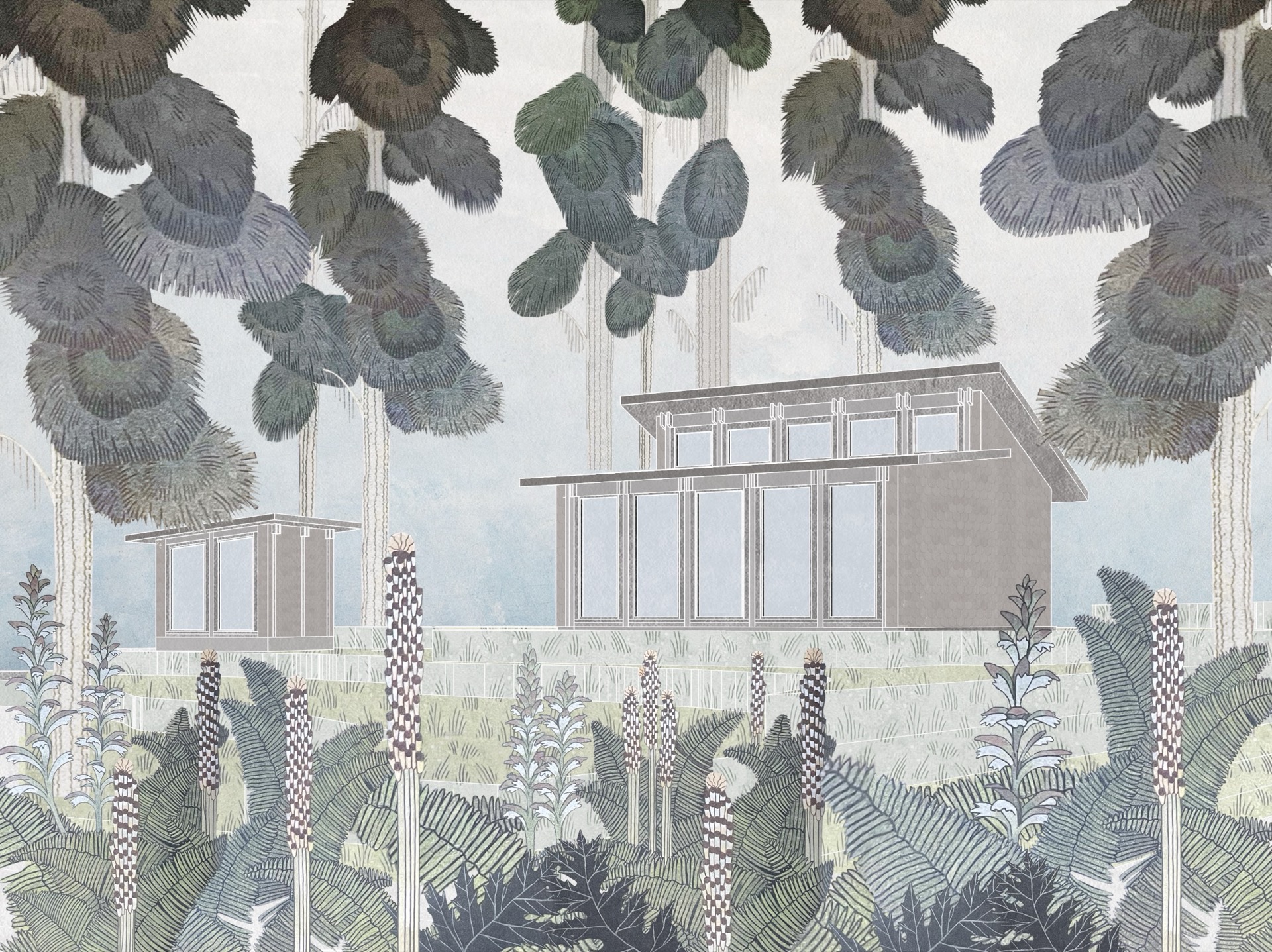
House in the Woods
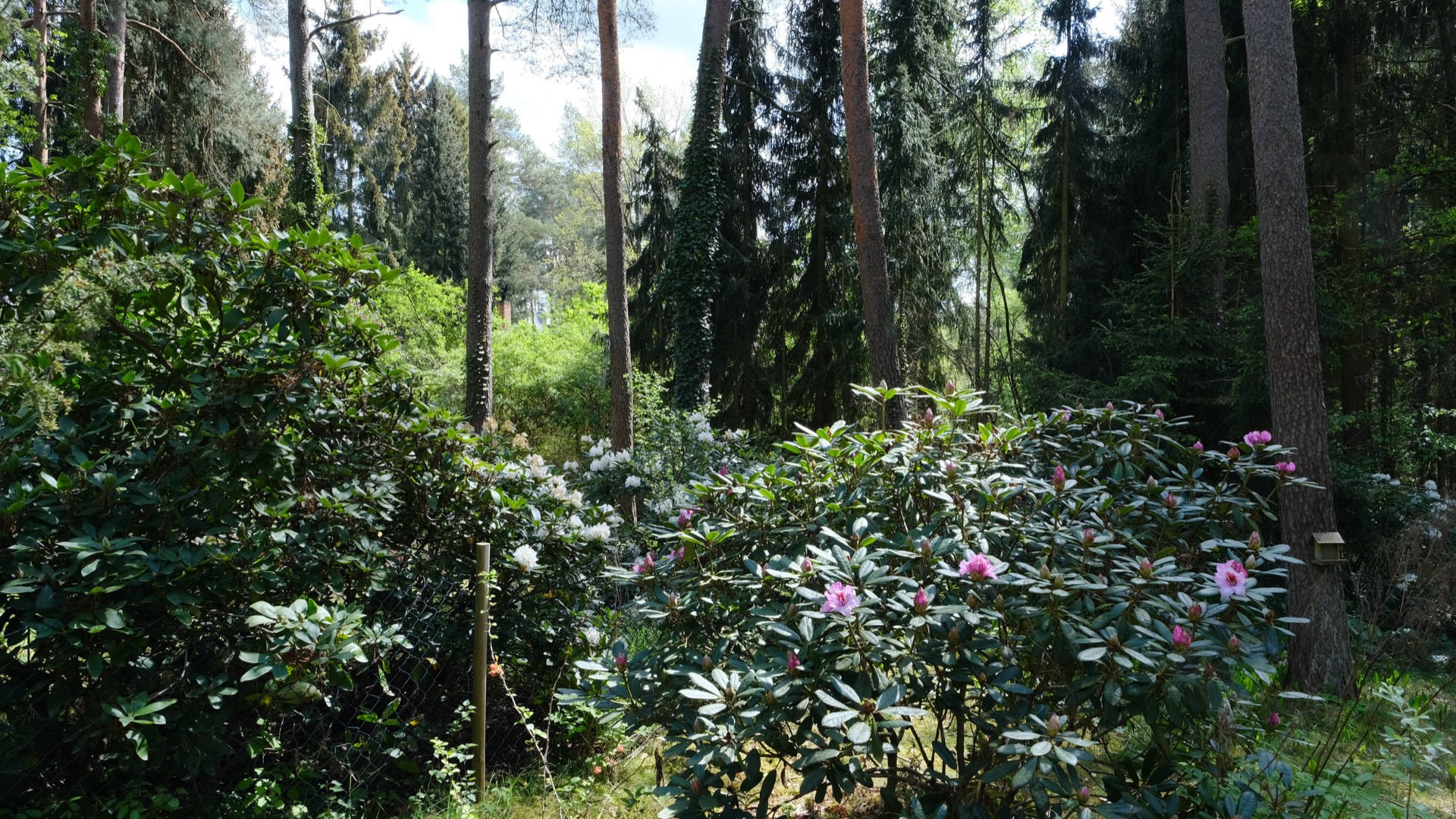
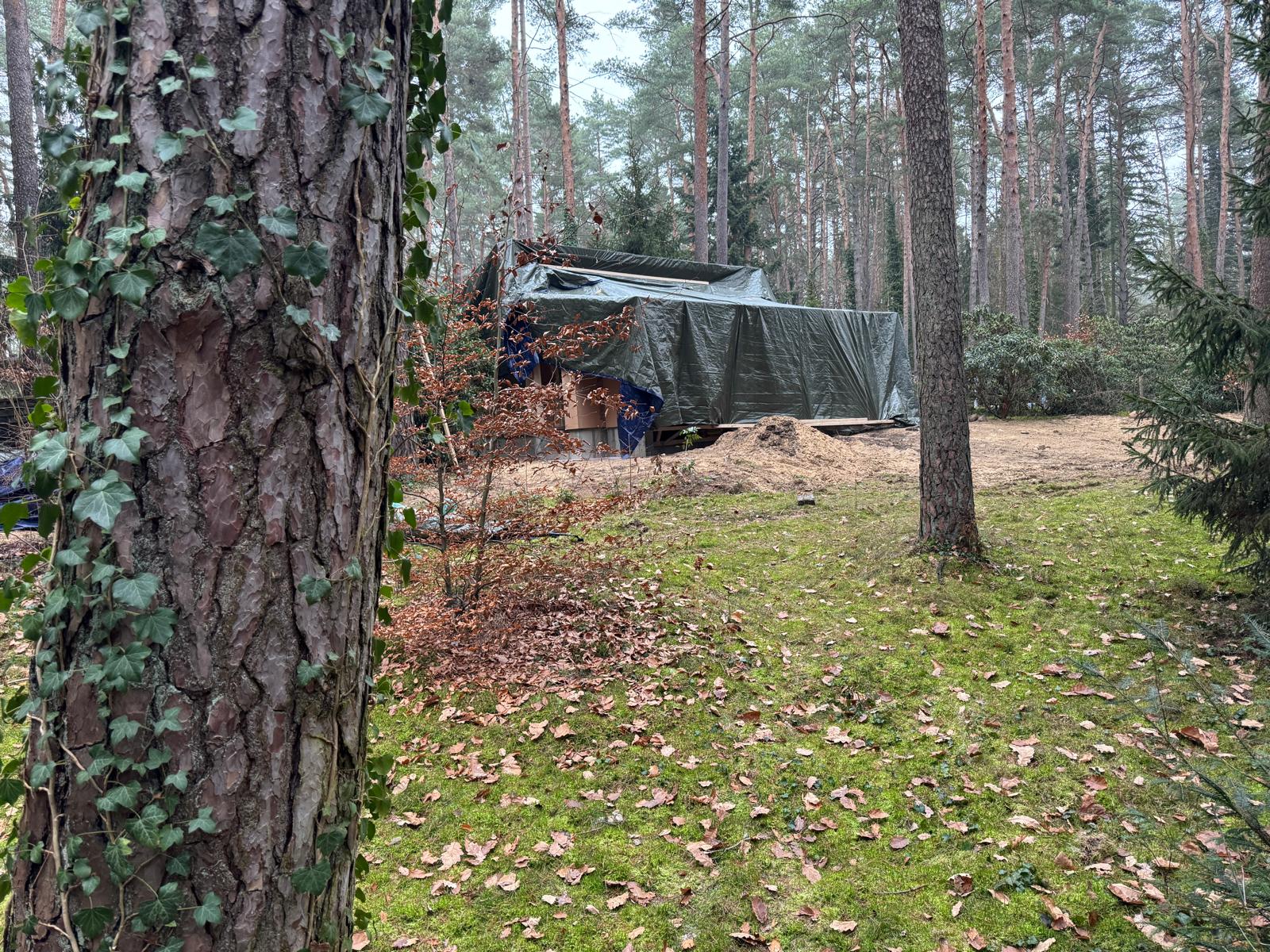
In a small cluster of holiday houses in the Brandenburg forest, a disused DDR bungalow had stood unused for decades. The surrounding pines gradually absorbed the structure, defining a site characterised by light, density and shade.
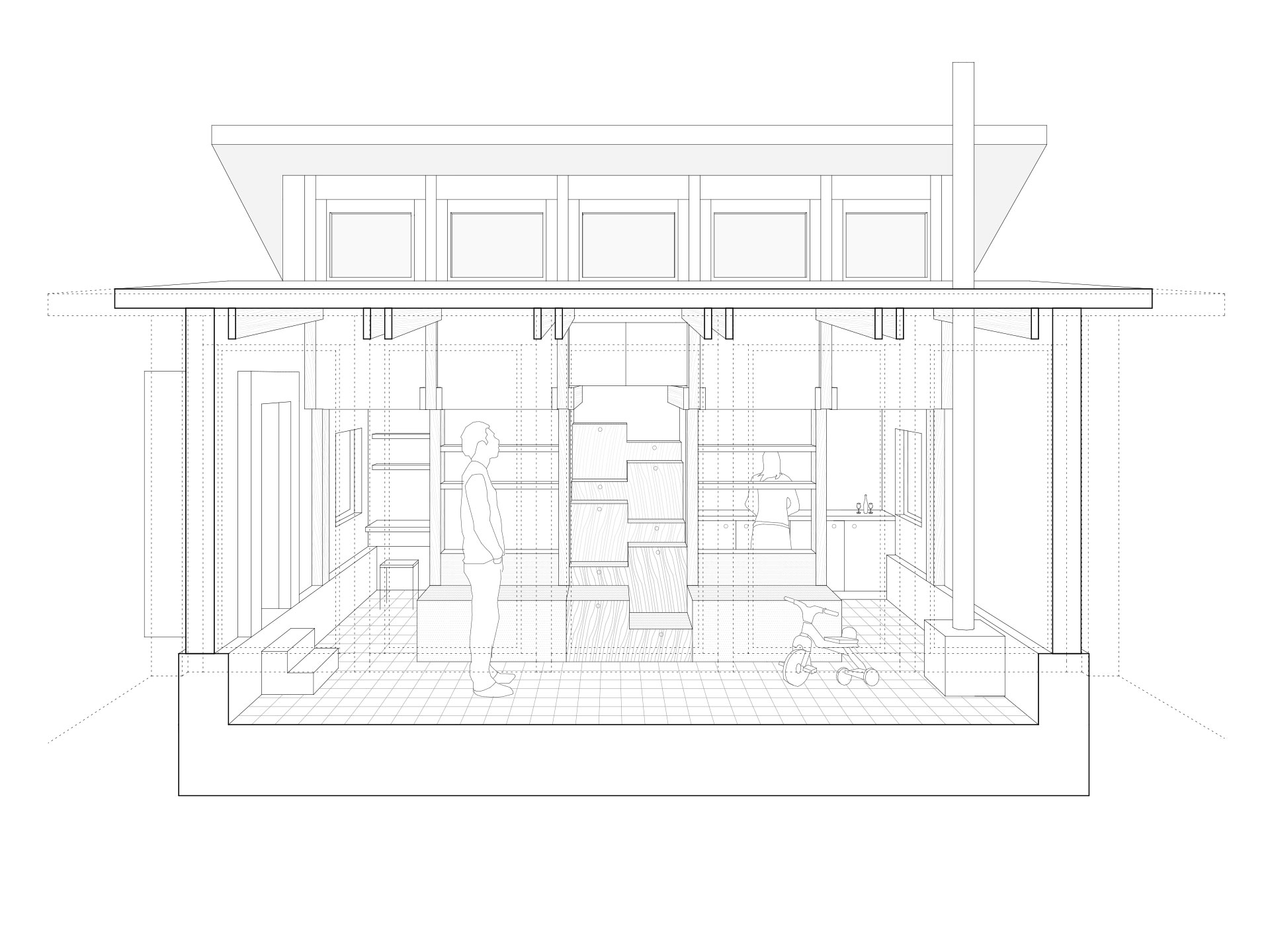
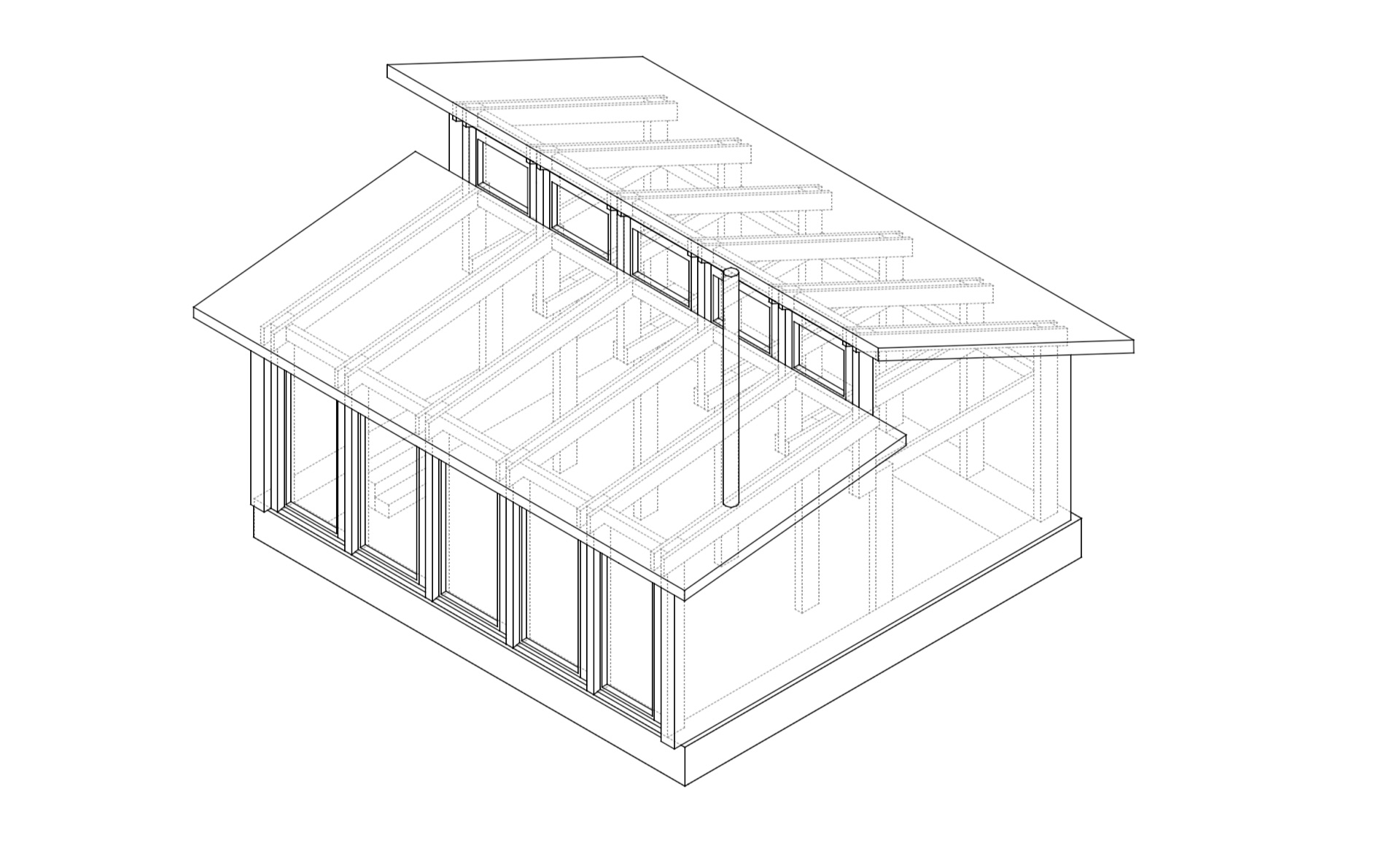
The new house occupies the footprint of the original while reinterpreting its spatial logic. The design positions the building in dialogue with the surrounding homes and the forest, respecting the existing scale, proportions and site constraints. One half of the structure retains the compact form of the original bungalow, while the other rotates outward to open fully toward the trees. Lowering the floor by 45 centimetres brings the interior closer to ground level, enhancing the connection with the forest floor and creating a more intimate view. Within strict height limits, this adjustment also generates space for a small sleeping platform above.
A single glass façade extends the interior toward the trees, while the compact plan increases efficiency without expanding the footprint. The house maintains a measured presence: precise in its geometry, restrained in its materials, and aligned with the rhythm of light, shadow and vegetation across the site.